
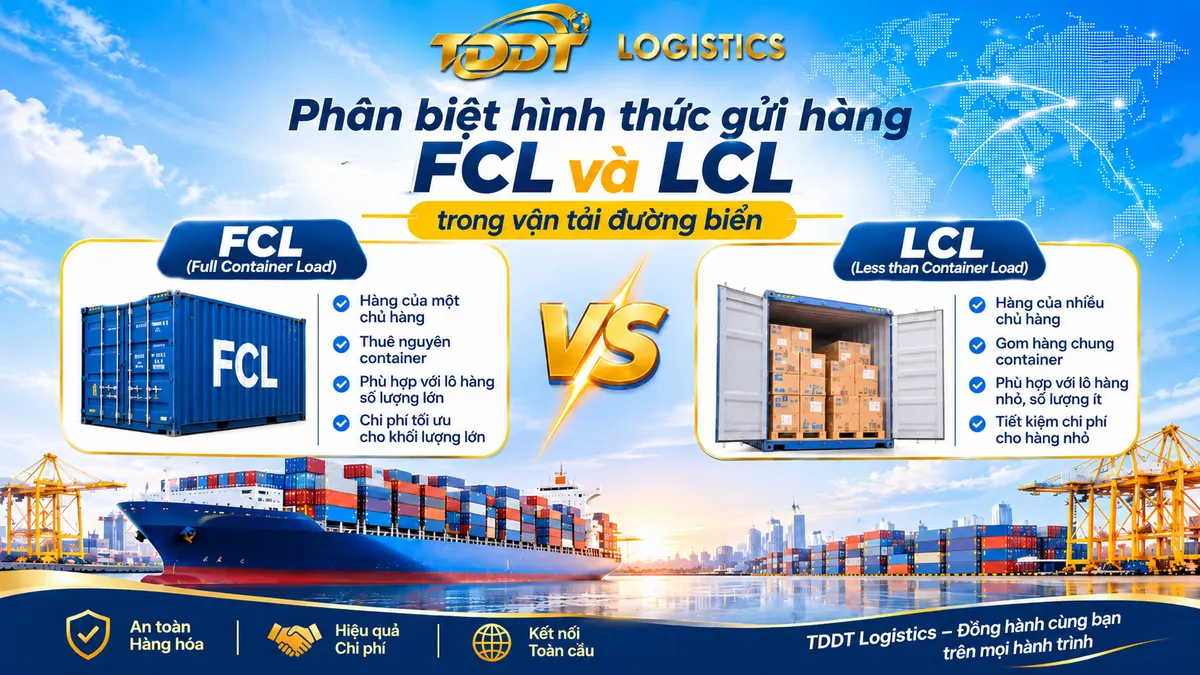
Key Takeaways for Businesses
- FCL (Full Container Load): Dedicated full container secured under shipper’s exclusive seal.
- LCL (Less than Container Load): Consolidation of multiple shippers’ goods into a shared container at CFS.
- For shipments exceeding 13-15 CBM, FCL often proves more cost-efficient and faster during destination unstuffing.
In international ocean shipping, FCL and LCL represent the two foundational freight modes that every supply chain professional must understand.
What is FCL? FCL stands for Full Container Load. This means the shipper’s cargo volume justifies booking an entire container (20ft, 40ft, or 40HC). The container is sealed from the shipper’s warehouse and remains intact until delivered to the consignee.
What is LCL? LCL stands for Less than Container Load. When you only have 1-2 pallets or several cubic meters (CBM), you book space within a shared container. A freight forwarder like TDDT consolidates multiple small consignments at a Container Freight Station (CFS).
Advantages of FCL: Faster customs clearance, lower risk of cargo damage or loss, and no waiting for consolidation.
Advantages of LCL: Cost-effective for modest batch sizes, eliminating the need to pay for unused empty container space.
Need help with this procedure?
TDDT is ready to advise and handle the full process on your behalf.